
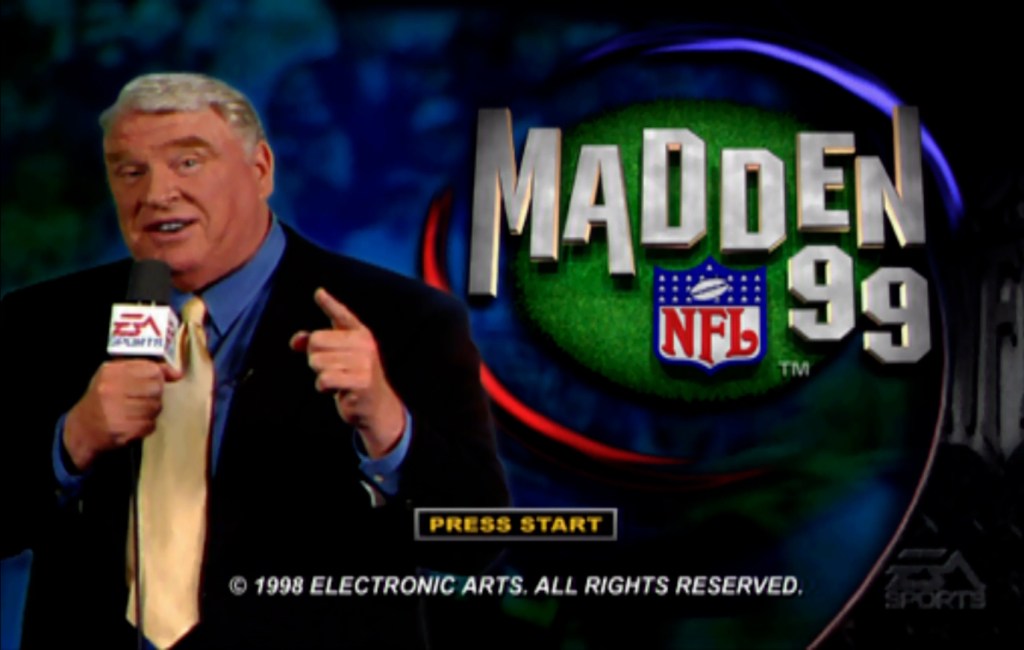
Madden NFL 99 revolutionized video games based on the National Football League (NFL) when they debuted “Franchise Mode” in 1998. Franchise Mode allowed players to take over their favorite franchise and control every aspect of building an NFL powerhouse including contract extensions, drafting rookies, and signing high profile free agents in the pursuit of the Super Bowl. 28 years later, Madden NFL 27 fulfills that promise, the dream of running a pro football franchise, even if it is just in video game form.
Over the coming weeks, we’ll go over everything you need to know to run a dominant franchise in Madden NFL 27, from start to finish.
Full Disclosure: We are running our franchise with the following settings: Full Simulation, Coach Mode, and Pro Difficulty Setting. All signings and roster fills will be handled by the user, and quarter length is 10 minutes with an accelerated play clock (run off to 15 seconds). Due to these settings, results may vary, and you can adjust settings to your own liking.
Evaluation: The first thing every aspiring GM should do before they play a single down with their new franchise is evaluate the financial you’re walking into. You need to identify and review the following info:
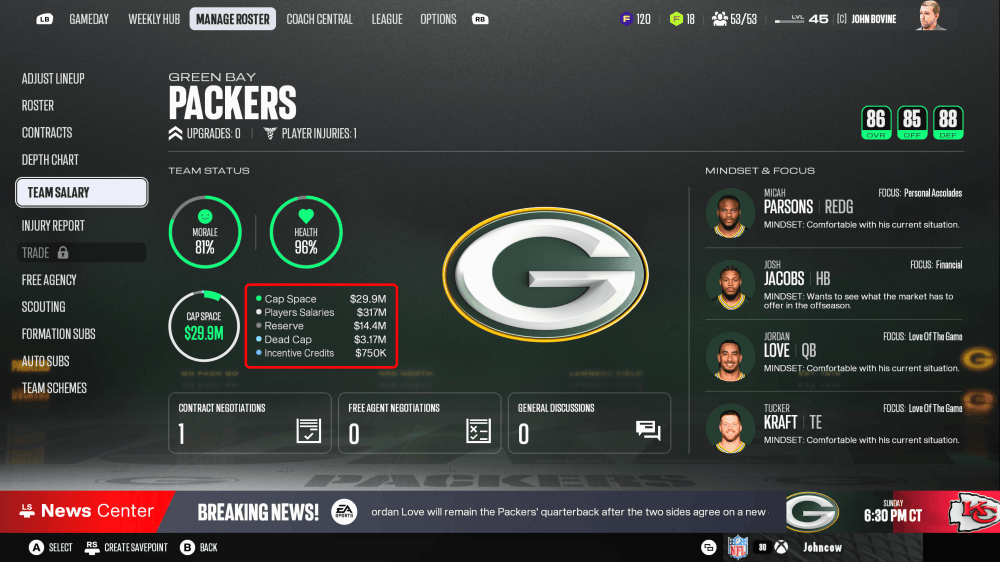
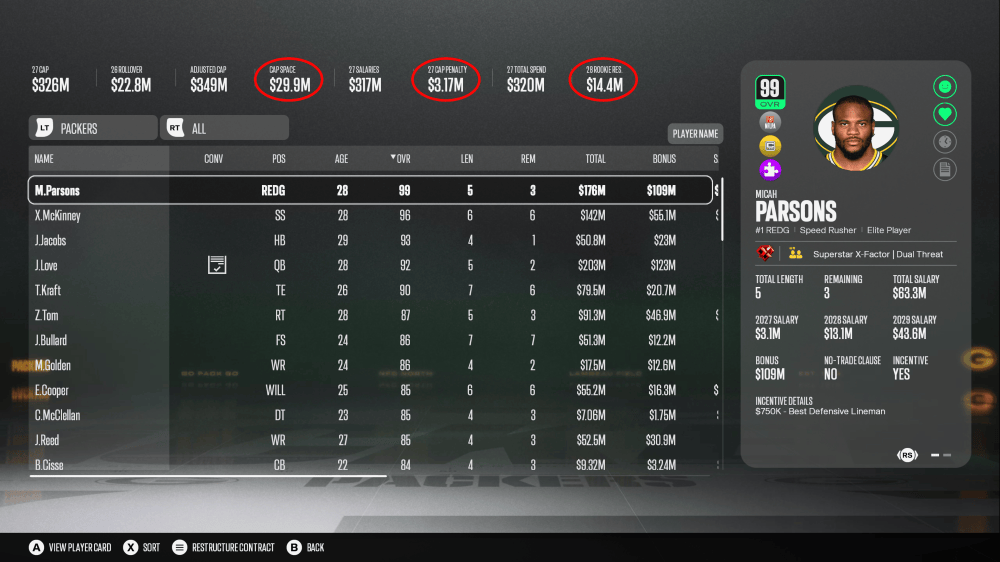
Cap Space: Cap space is at the core of building a competitive roster. You need to know how much space you have, how much is in the rookie reserve, and most important, how much you have in cap penalties (or dead money).
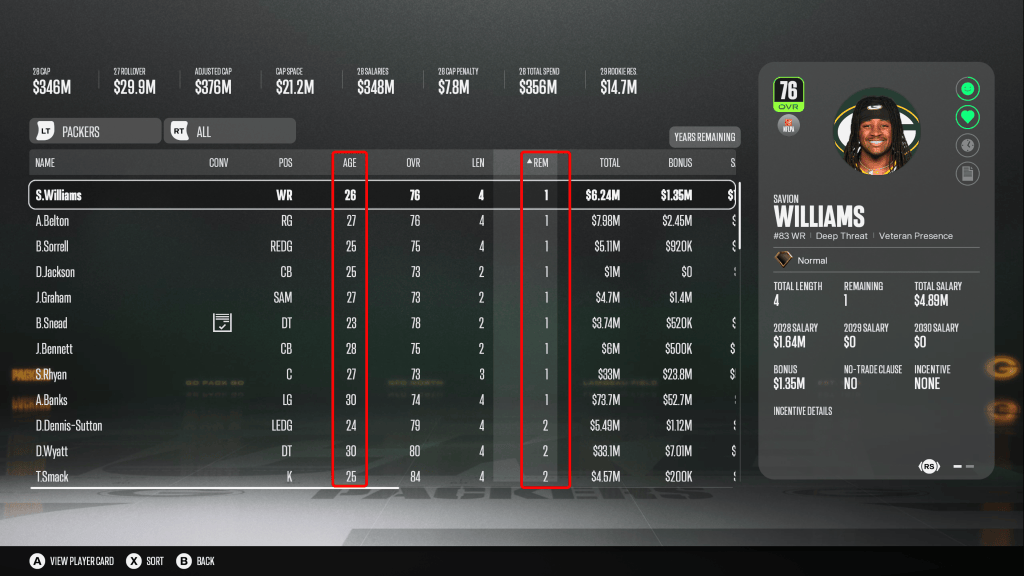
Expiring Contracts: You need to evaluate what players will need new contracts, and what players you are thinking about letting go. How many players will you be replacing at the end of the season? Players with two years left on their contracts will be looking for extensions, and you need to have a game plan.
Draft Picks: Just like the NFL, Madden NFL 27 conducts a rookie draft following the first free agency period. How many picks do you have, and where might they be in the draft order? The draft is all about value at position, and you need to have a strategy in place to get the most value for your team.
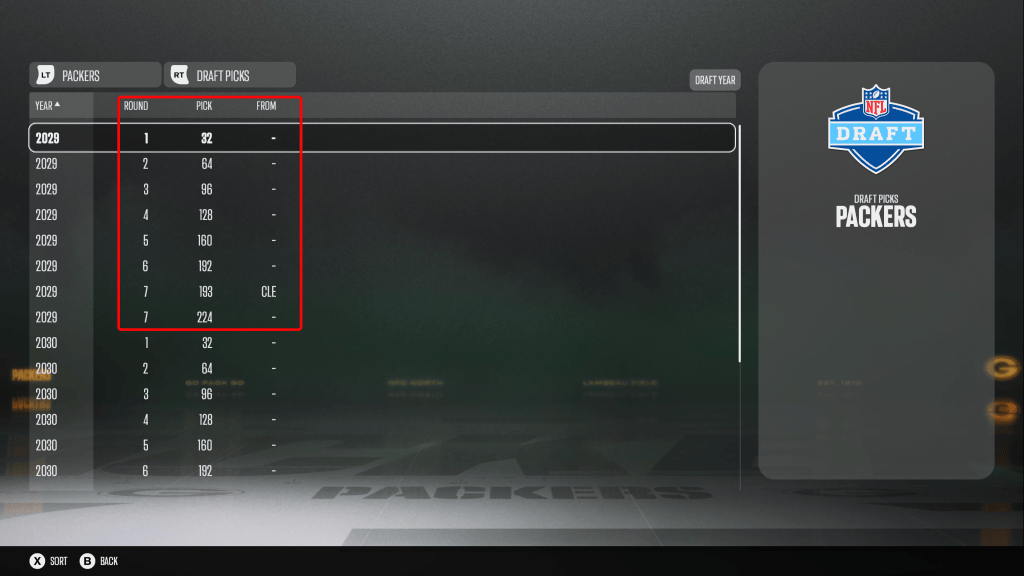
Potential Cuts: Where can you make upgrades to the team? What are your positions of need? How do you upgrade those positions without leaving a hole at a key position? Do you look to free agency, a trade, or the draft? What kind of penalties are you willing to endure to not only be competitive, but to bring a championship home?
The information needed to answer all of these questions can be found in the “Manage Roster” tab, and reviewed any number of ways, but you need to come up with plan now, or suffer the consequences later. My advice, as nerdy as it sounds, is get a notebook and take notes. Knowing what you have, what you need, and the financial disposition of your team allows you to start planning for the future of your franchise and start putting efforts and resources in place to get there.
Decision Time: After you get done evaluating your franchise, you will need to make some big decisions. What do you want your team to look like week in and week out? What will be their identity? What kind of presence will they have on the field? Will they be a West Coast, precision offense like the 90s era Packers or 49ers, or will they be a defensive powerhouse like the 85 Bears or 70s era Steelers? Maybe you want to be a fast offense like the Rams’ “Greatest Show on Turf”, or the “Two Headed Monster” the Raiders had when they had Marcus Allen and an unknown running back named Bo Jackson. You need to decide what type of team you’re building, because the salary cap will be a roadblock if you’re not careful.
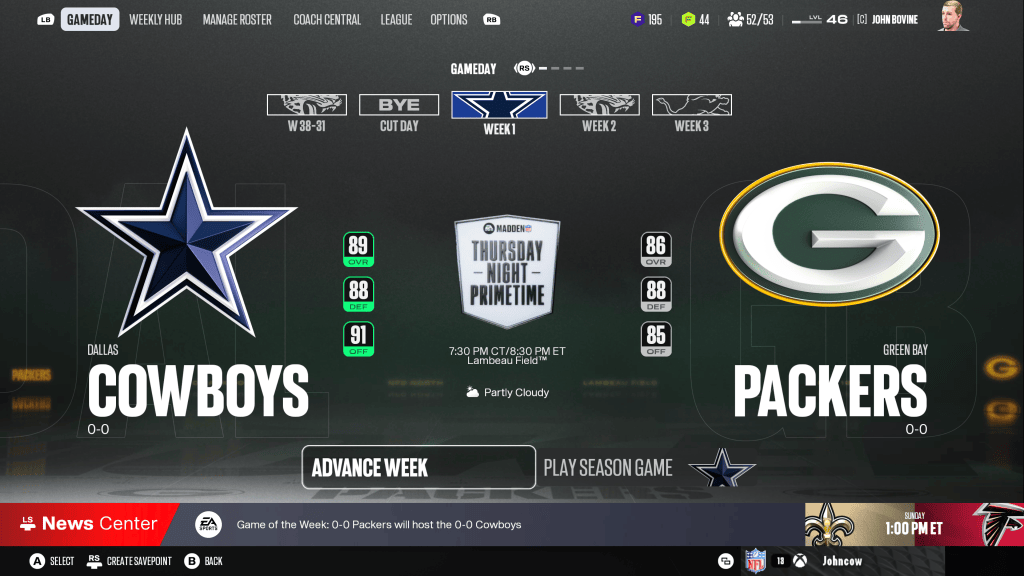
For our franchise, the Packers, we are trying to operate a power run offense that can also stretch the field from time to time. On the defensive side of the ball, as much as I love the “Steel Curtain” of the 70s, I tend to be more of a “bend but not break” defense that gives up some yardage, but rarely gives up a lot of points. The power run offense helps with this, but sometimes the defense breaks down, and I have to be okay with those occasional situations. Why? Because the reality of the salary cap dictates what I can do, and most of my salary is tied up on the offensive side of the ball.
Cap Management is the most important aspect of my franchise, which means more often than not, I must draft, develop, and retain my players when possible. Yes, I will occasionally make a splash in free agency, but more often than not, I want my players to stay on my team for the bulk of their careers, before I start looking for their replacements.
The reasoning behind this philosophy is simple; in the Madden Engine, players develop the most in their first 4-6 years, then development tapers off in years 7-9, before regression begins in years 10 and beyond. Yes, there are exceptions, but once a player hits age 29-30, I try to move on with younger players.
Depending on the position, I will draft or sig a young player, let them sit behind the starter for a year or two, then give them a shot at the starting role depending on how they perform. We’ll dig into rookies and free agents more in another article, but for now, you just need to understand how the draft and develop strategy works in Madden NFL.
Schemes: Once you know what kind of identity you want your team to have, you can start selecting offensive and defensive schemes to you get the results you want. Madden NFL 27 offers 11 offensive and 10 defensive schemes to build your team around, and requires specific player types to make them work. Land enough players in a given scheme, and your team receives performance and ability boosts based on scheme fit and unit cohesiveness on game day.
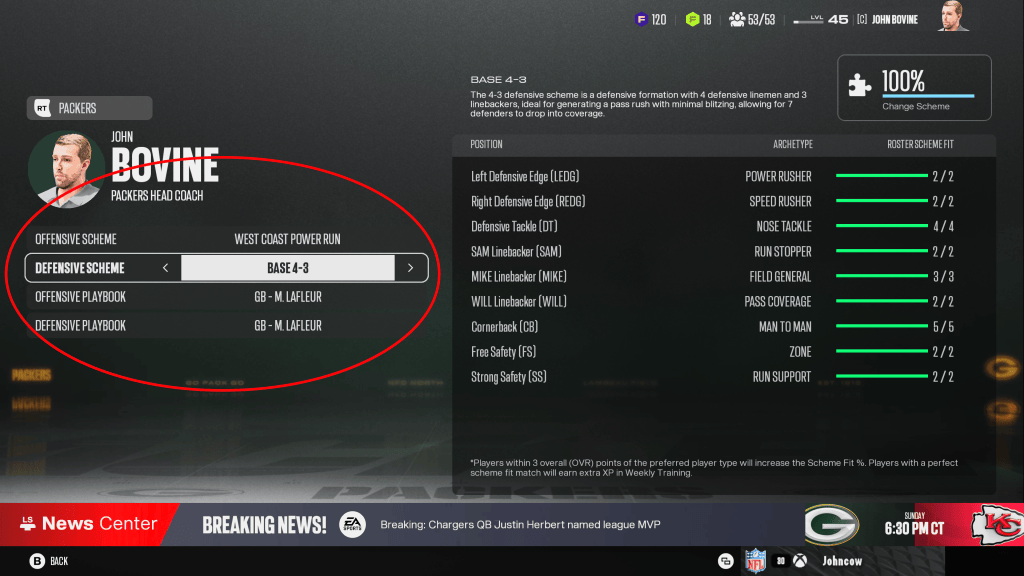
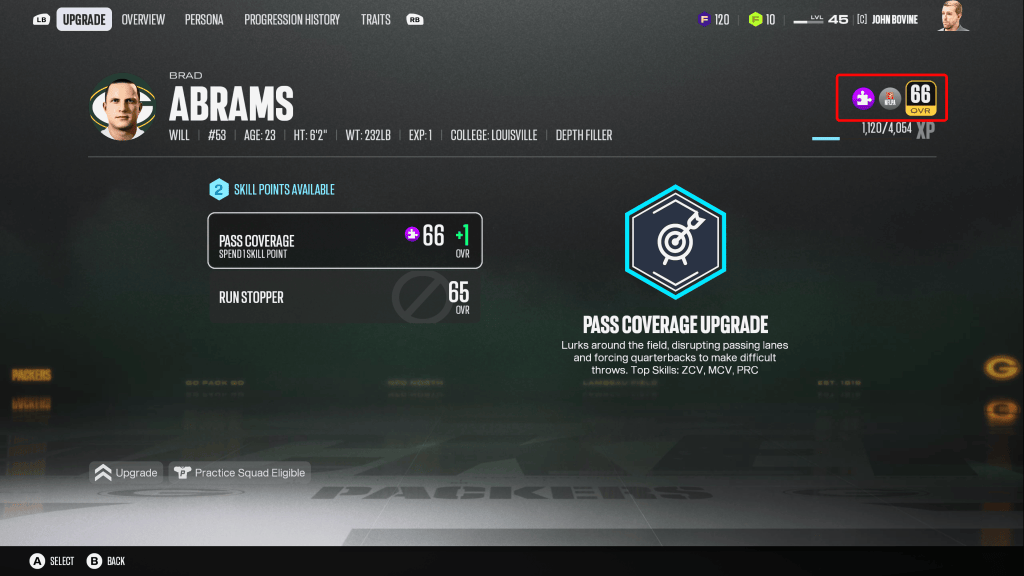
Players that fit your scheme are denoted by the purple puzzle piece on their profile card. By navigating to the Team Schemes tab, you can find out how many of your players fit your current scheme, and highlights any areas of need you may have. Schemes are the second most important thing to keep in mind when looking at players for your team right behind salary cap.
Team specific playbooks are meant to mirror or mimic the playbooks of the various teams in the NFL, but you don’t have to use those playbooks exclusively. You have the ability to augment or edit existing playbooks through the use of your Coaches’ play sheets. If you prefer to use custom playbooks of your own design, you can create your own playbooks outside of Franchise Mode, then import them once you are satisfied they meet your needs. Either path, play sheets or custom playbooks, allow your Madden NFL 27 experience to be uniquely yours.
In the next installment, we’ll be discussing how best to fill out your roster, from rookies to free agents, trades to veterans, all to deliver the most bang for your buck to your roster.


