
You’ve picked your team, zeroed in on your team’s identity, and decided on the schemes you’re going to use on offense and defense. Now it’s time to start assembling the pieces that are going to define your success (or failure) as a GM or coach. The key to building your team are the players and how they fit your schemes, how they affect your salary cap, and how season events impact their morale, which affects how they perform on game day.
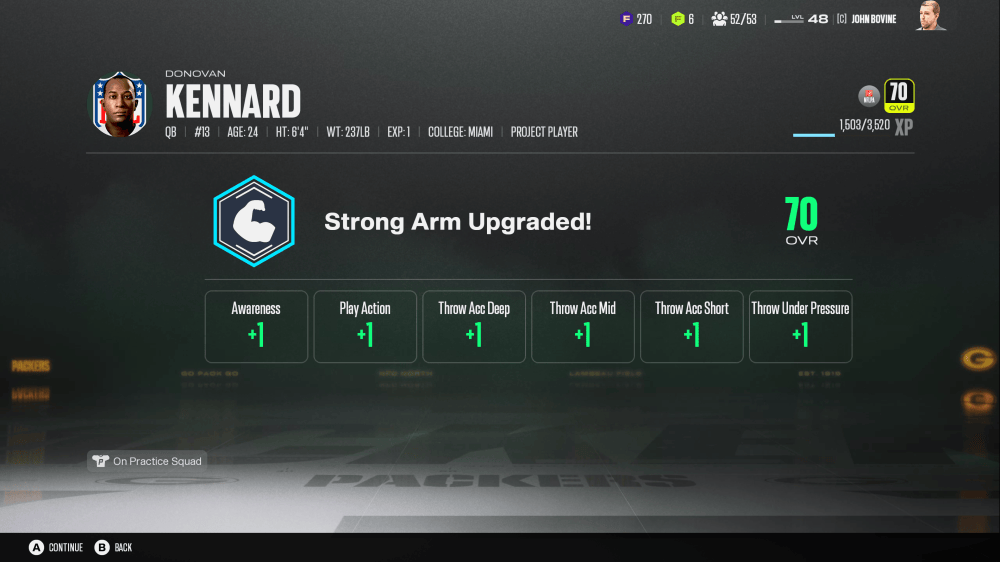
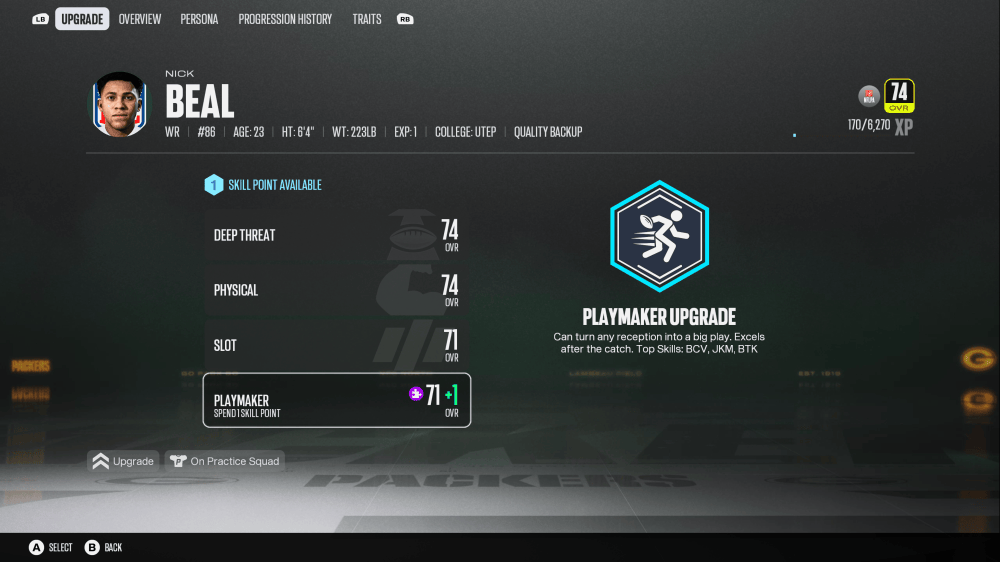
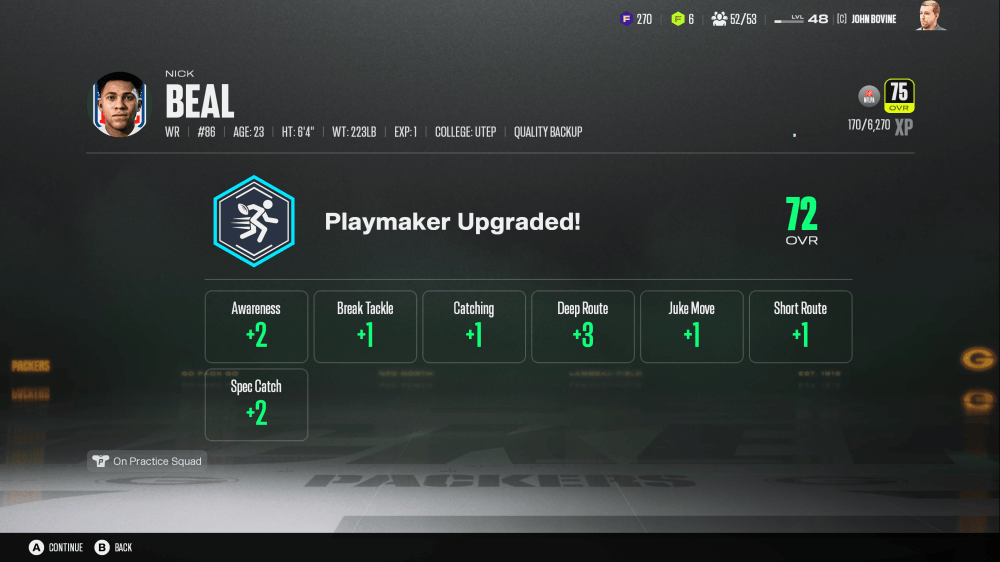
Outside of cap management, the most important aspect of teambuilding is getting players that fit your scheme, or at the very least, can be developed into players that fit your scheme through development points, which they earn by completing milestones in game and throughout the season.
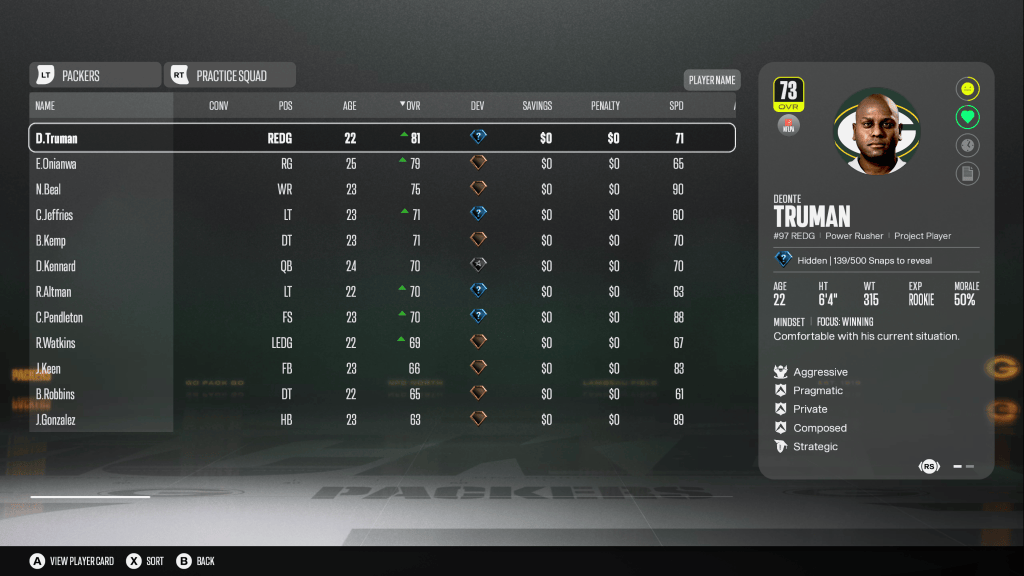
When looking for players to fill out your roster, it all boils down to a handful of characteristics based on their age, personalities, and physical abilities. Their OVR ratings almost never matter except when it comes to salary. Players with high OVR cost so much more in salary than they are worth, it’s often wiser to go with younger players with a higher ceiling rather than signing a veteran with the best rating.
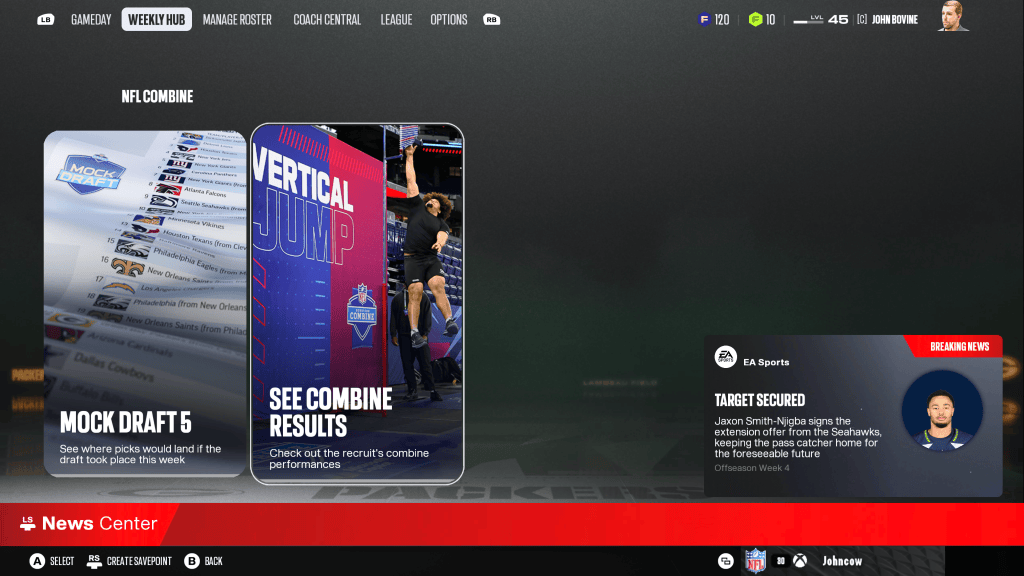
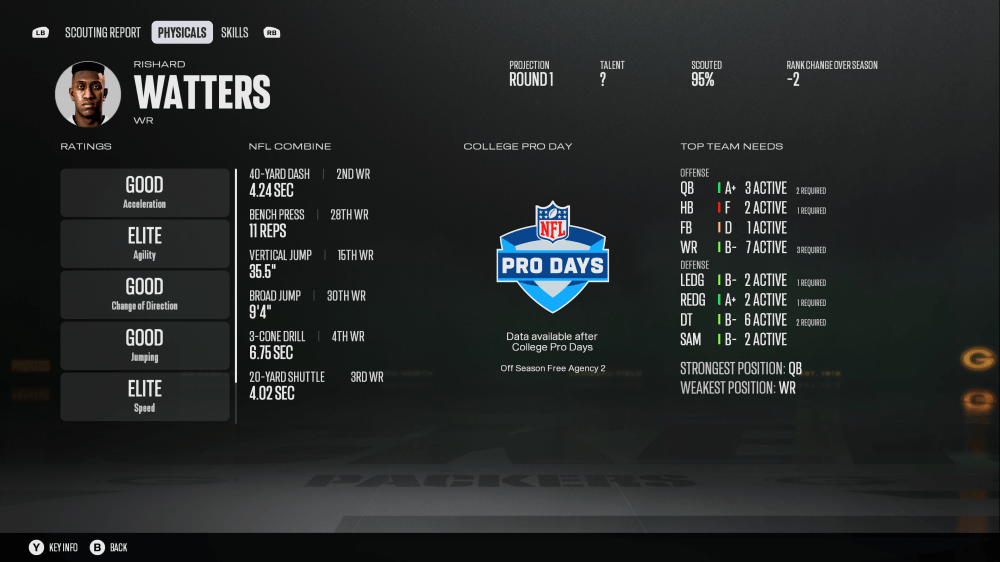
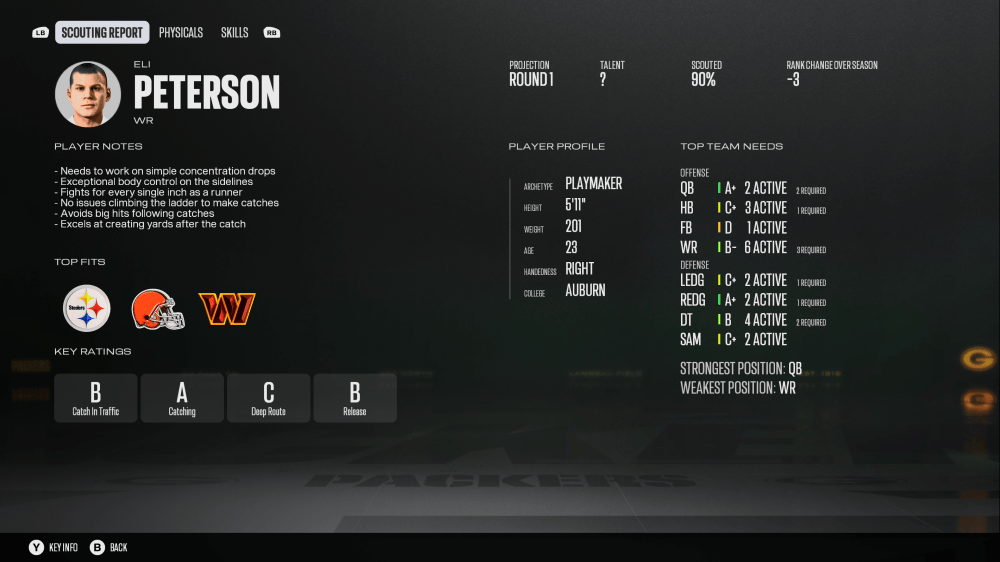
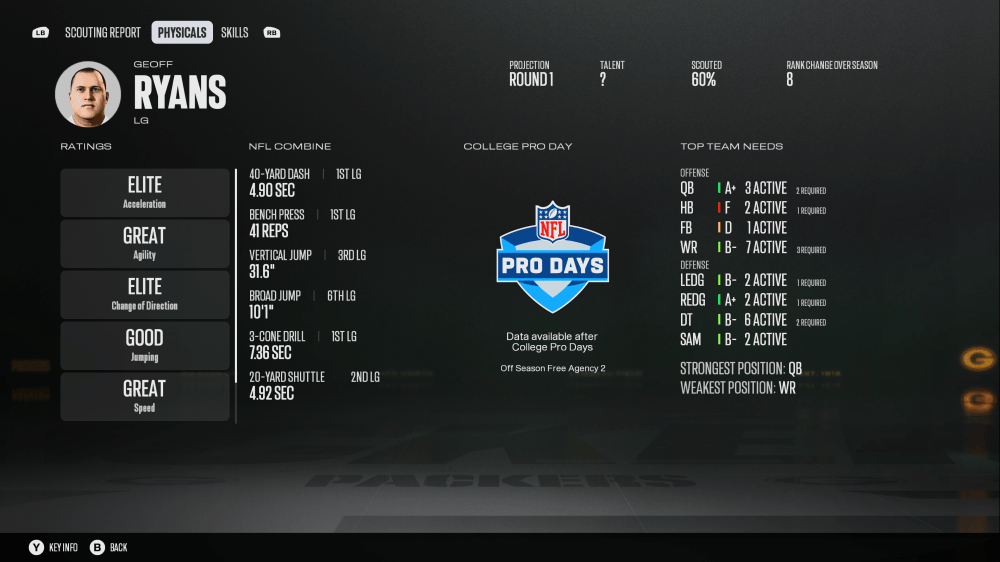
So, how do you spot these players? If they’re rookies, a good place to start are their combine numbers and their physical attributes such as age, height, and weight. Knowing their potential grades for different ratings is nice, but raw numbers are going to be a much better way to determine your draft day decisions, more so than projected draft round where they will be picked, which is where scouting comes in.
Here are the guidelines I use when reviewing potential draft and free agent candidates for my offense. Where applicable, I’ve added scheme suggestions as well.
Critical Note: The guidelines that follow ONLY work if you understand how the Madden Game Engine works with respect to age. Players in the Madden Engine achieve most of their development and progress through the first 4-6 years of their careers. There are outliers based on performance, but the bulk of their development points are earned in the first half of their careers, so you will want to cycle players every 4-7 years to avoid regression (and most important, avoid salary cap Armageddon). I’m not saying don’t keep players you like, I do every year, but the bottom line is their most impactful years are from years 1-7, after that their development slows and begins to fall off. Yes, performance on the field can influence this, but you want to get the most out of them earlier rather than later, then move on.
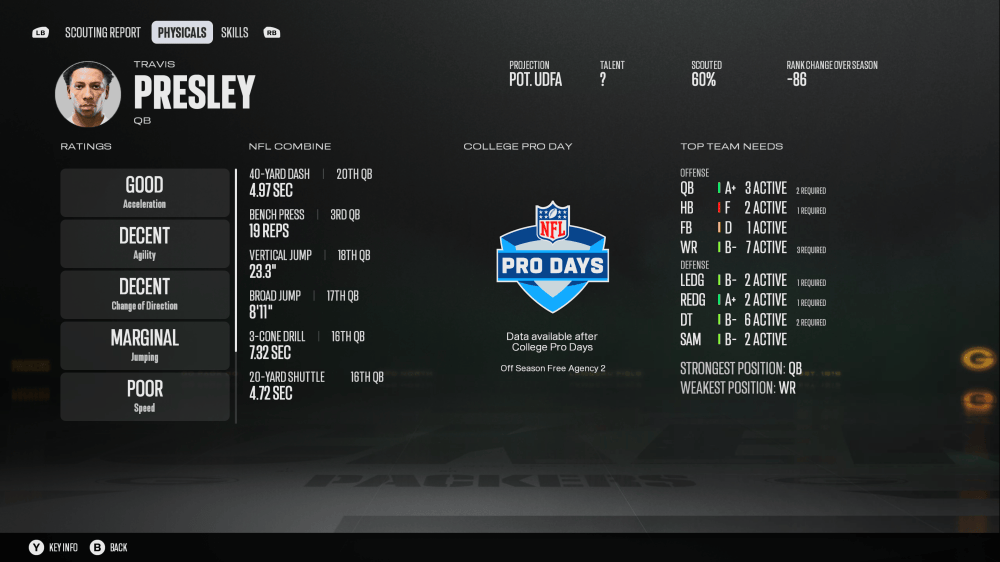
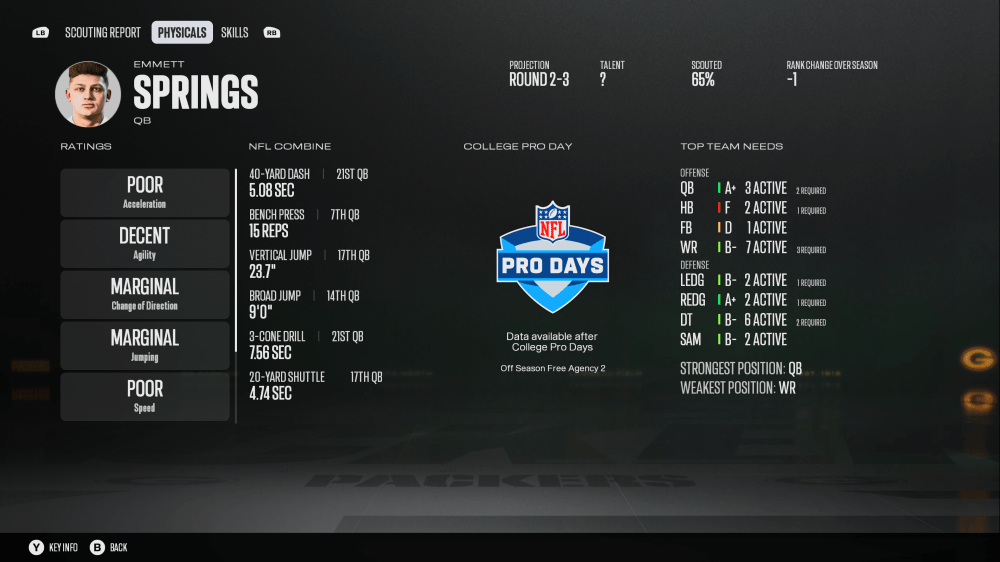
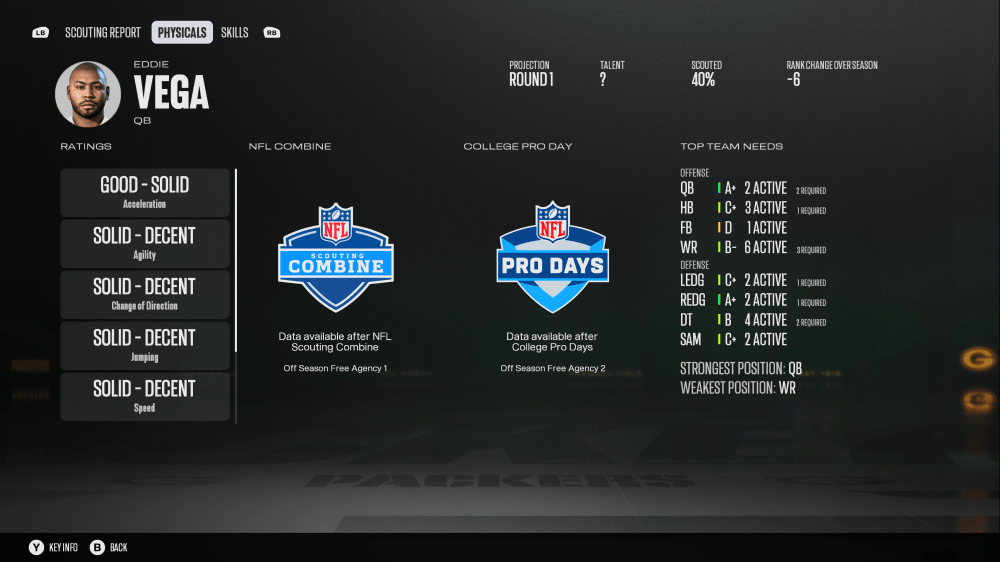
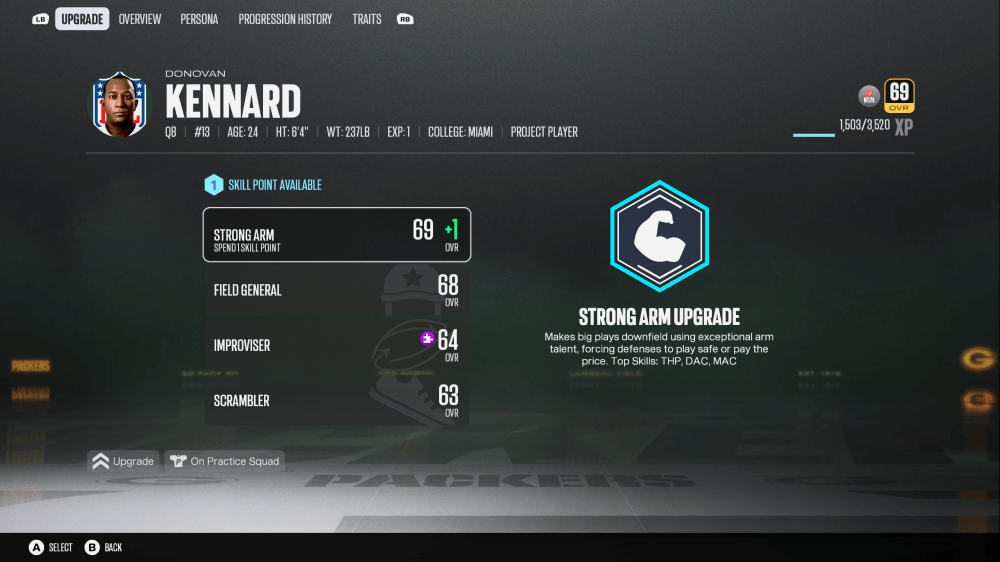
Quarterbacks (QB): Throwing power is the single most important ability you can look for in a QB. Nothing else matters from an ability standpoint. The best way to gauge this on draft day is via Bench Press, so a QB with bench reps in the 15-21 range or higher is optimal. If you’re looking at free agents, I wouldn’t take a QB with a THP rating less than 91 or 92 – they need to be able to throw downfield when it counts and Throwing Power is everything in a QB. All other abilities – ACC (Short, Medium, Deep), AWR, and MOR can be improved through development points based on scheme.
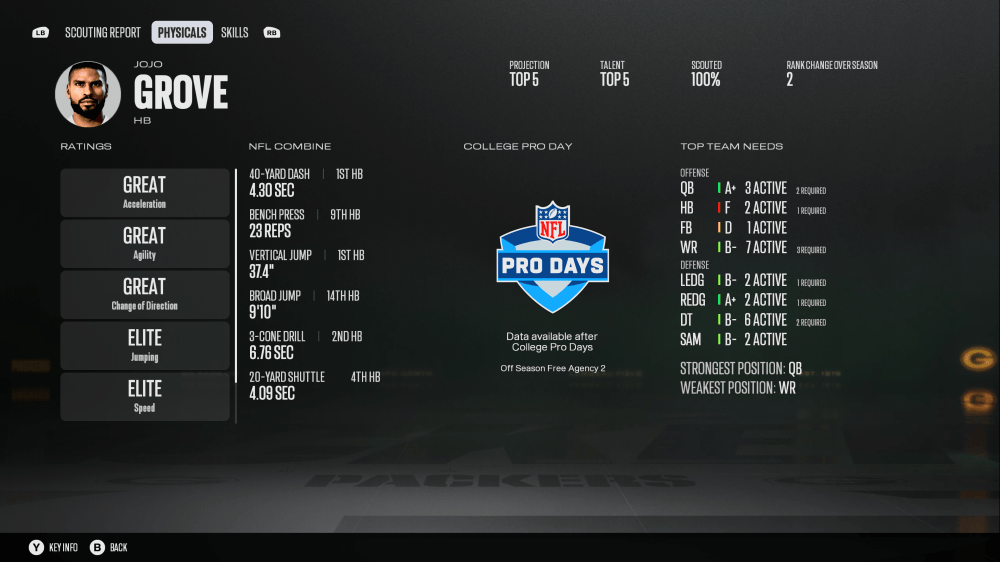
Halfbacks (HB): When it comes to running backs, it’s important to know your scheme as that will determine your needs. Since I operate a “Power Run Scheme” using a “Two Headed Monster” approach, I opt to have a Power Back as my primary running back, and an Elusive Back as my secondary, change of pace back. If you’re running a Pure West Coast, Spread, or Run n’ Shoot offense, you will want to opt for a combination of Receiving Back and Elusive Back as your tandem in the backfield. For Power Backs, I look at Bench Press (STR), physical attributes (size/wieght), and a 40 yard dash in the 4.4 – 4.6 speed range (SPD range of 85-87). For Elusive and Receiving Backs, you will want 40 dash speeds in the 4.3-4.5 range (SPD range of 85-90), along with good Shuttle and Cone Drill speeds.
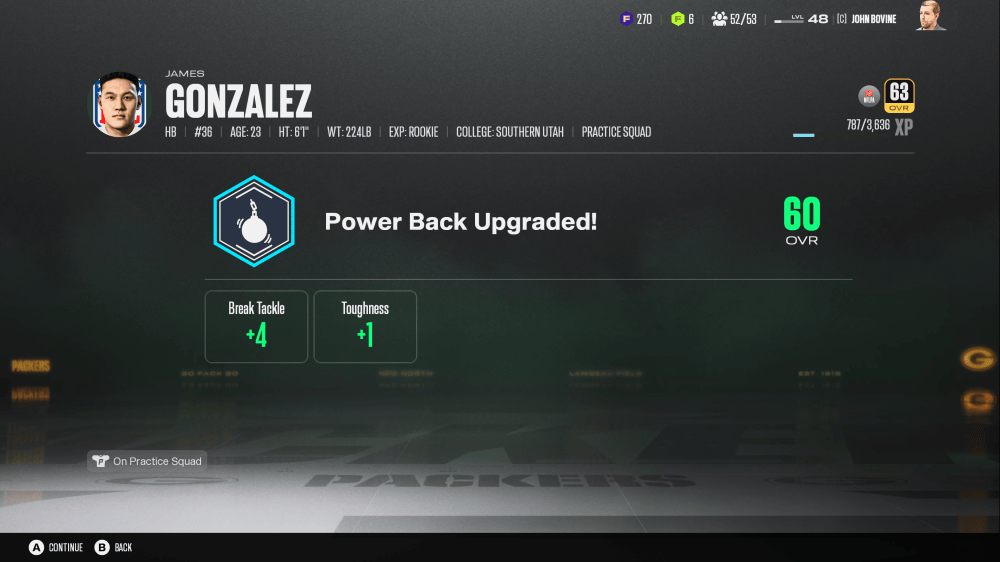
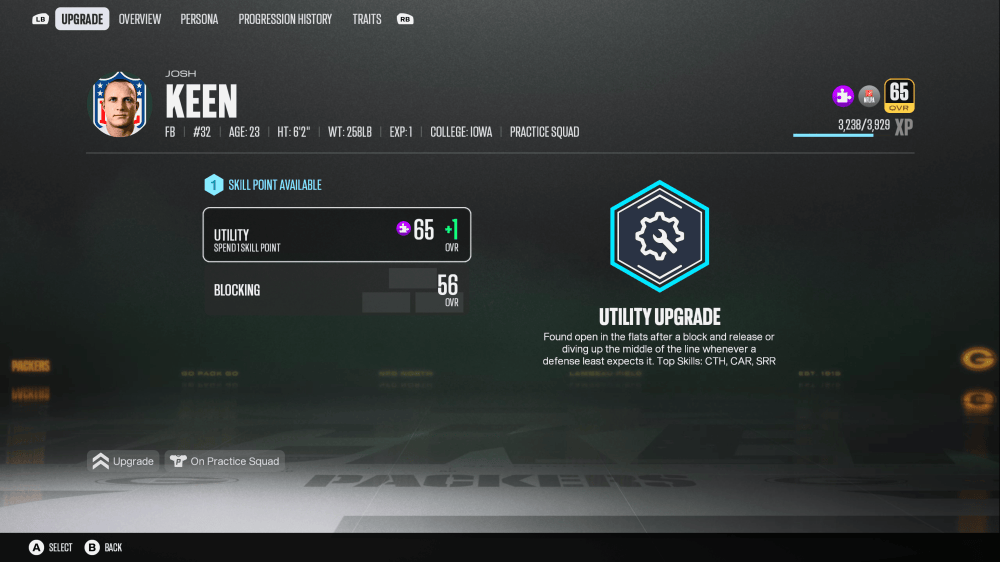
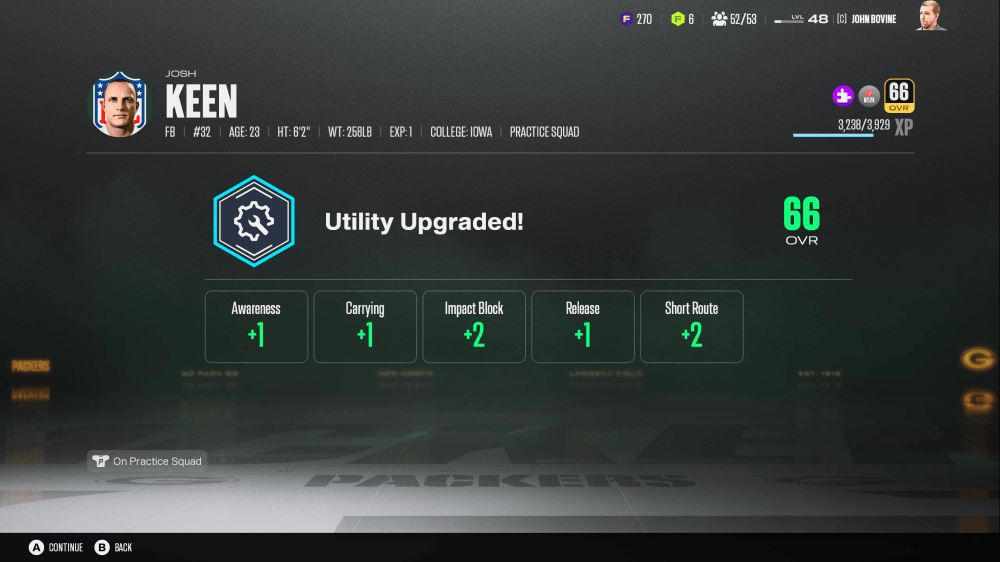
Fullbacks (FB): If you use a fullback, Utility is King, and you can easily draft or sign a Tight End for this position if there aren’t enough fullbacks available. The stats/ratings you will want to concentrate on are Bench Press (STR), Cone Drills and Shuttle Drills, and 40 Yard Dash 4.4-4.7 (SPD of 82-88).
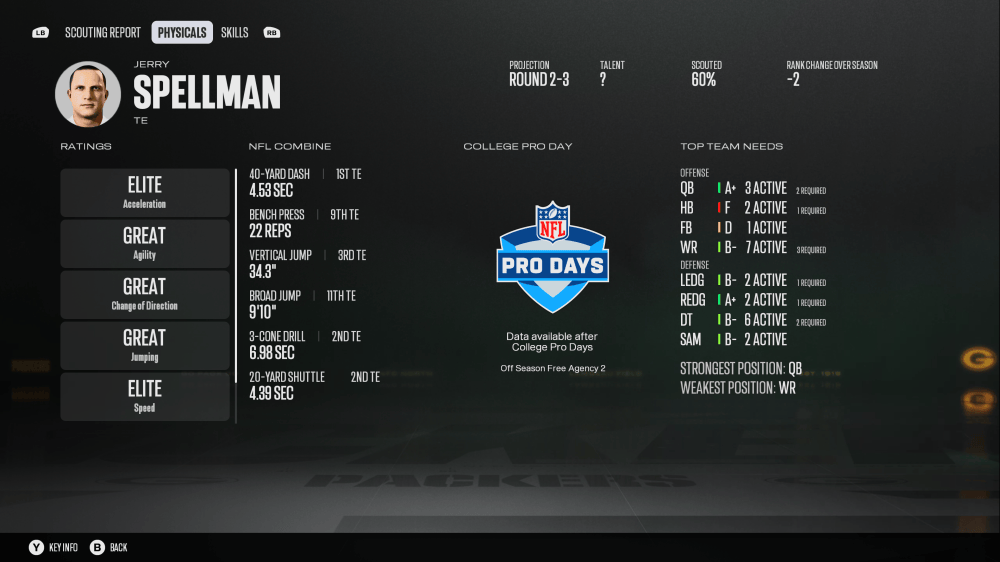
Tight Ends (TE): Similar to Wide Receivers, Tight Ends come in three flavors, Vertical Threat, Possession, and Blocking. In my offense, I run a combination of Vertical Threat Tight Ends and Blocking Tight Ends. When drafting/signing TEs for these roles the most important abilities/stats you can look at are: Bench Press (STR), 40 yard dash of 4.4-4.7, Cone Drills and Shuttle Drills, Physical Attributes (Height/Weight), and their Vertical (Combine).
Wide Receivers (WR): So many WRs, so little time. You want a good balance of roles divided between Playmakers, Possession, and Vertical Threat WRs. You need the ability to stretch the field, but you also need to have receivers come through in the clutch. Though I use a Power Run Scheme, it is derived from a West Coast offensive core, so my receivers need to be able to go deep on occasion, but also need to be able to make plays on slants and crossing patterns across the middle. The most important abilities/stats you can look at are: 40 yard dash range of 4.29-4.4 (SPD range of 91-99), physical attributes (height/wieght), Vertical, Bench Press (STR), and Cone Drills and Shuttle Drills (AGI).
Offensive Tackles OT: The philosophy here can’t be more simple, bigger is better. The ONLY scores that matter are Bench Press north of 30+ Reps (STR of 87-90 or more), Cone and Shuttle Drill, and physical dimensions (Height/Weight).
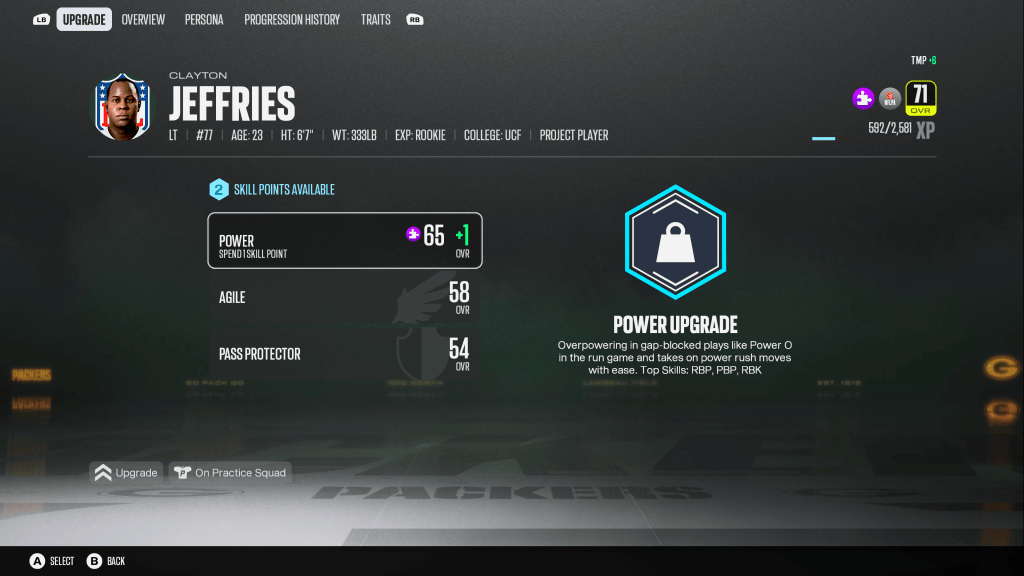
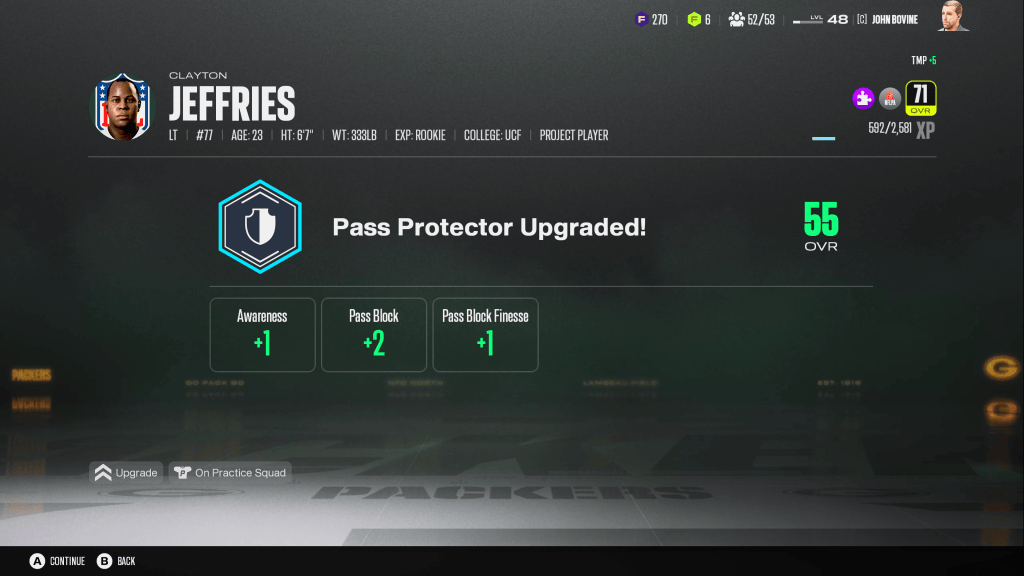
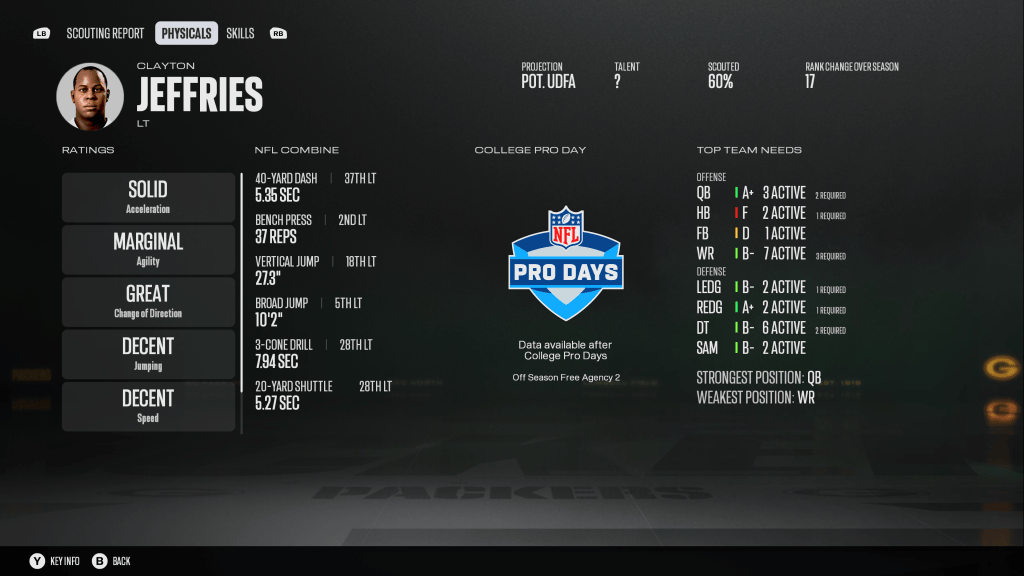
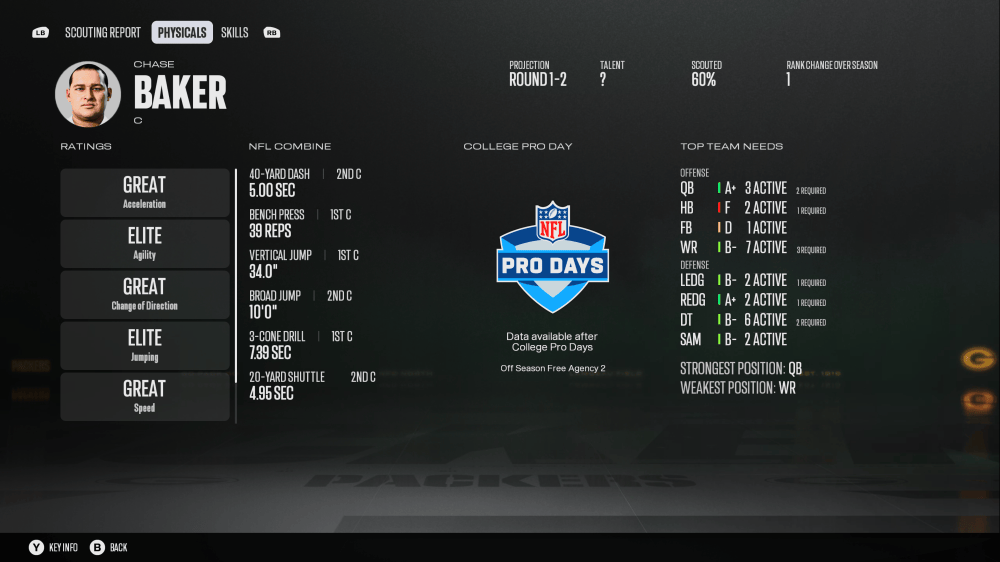
Guards and Centers (IOL/C): Raw Strength wins the day. When it comes to Centers and Guards, the two positions are interchangeable, so you only need to look at the following attributes: Bench Press of 30+ Reps with 34-39 being ideal (STR of 87-90+), Cone Drills and Shuttle Drills, and of course Physical Dimensions (Height/Wieght).
Overall, you want to build an offense that is going to be able to put points on the board and control the clock. Your opponent’s offense can’t hurt you if they can’t get on the field, and the best way to control this is through clock management, which is the domain of the offense.
The next article we will be discussing my favorite part of the game – DEFENSE! How do I crush my opponents? Simple, without mercy!


